Local Guide
Telok Ayer Street: Singapore’s Street of Faith
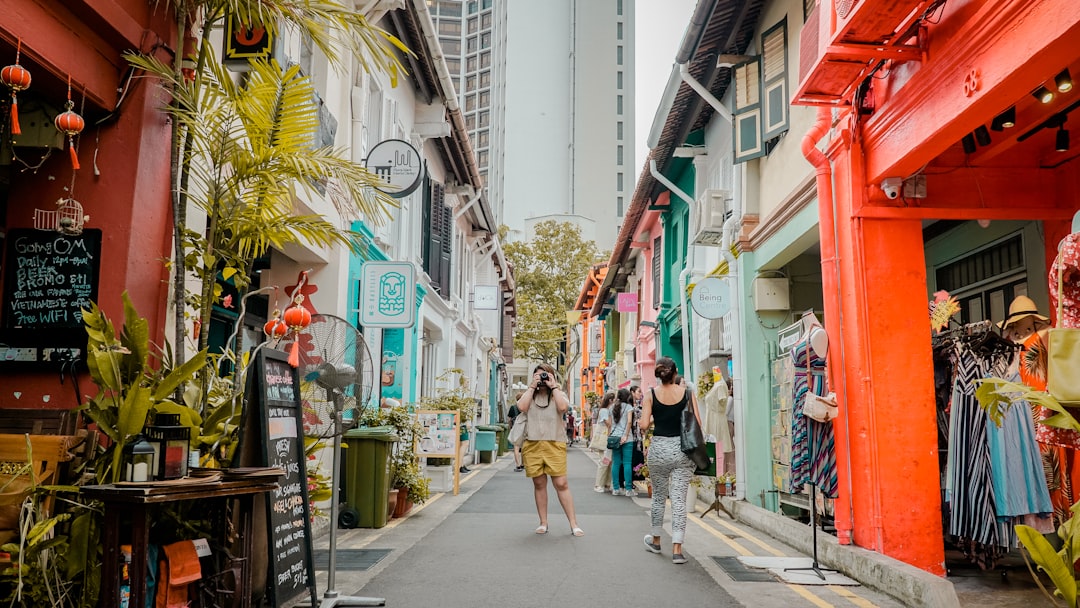
Few streets pack quite so much faith into so short a stretch as Telok Ayer Street. Today it runs through the heart of the financial district, hemmed in by office towers and lunchtime crowds, but two centuries ago the shoreline lapped right up against it. “Telok ayer” means “water bay” in Malay, and this narrow lane once fronted the open sea. For the Chinese, Indian and Malay immigrants who first stepped off crowded junks here, it was the very edge of a new life. Many, grateful simply to have survived the voyage, built a temple, a mosque or a shrine in thanksgiving. The result is a remarkable concentration of Singapore’s earliest places of worship standing shoulder to shoulder along a single road, and this guide walks you down it. When you are ready to look any of them up, you can browse all places of worship in our directory.
Why a street of faith grew here
Before land reclamation pushed the coastline hundreds of metres out towards present-day Marina Bay, Telok Ayer Street was a waterfront where vessels dropped anchor just offshore. For people who had crossed the South China Sea or the Bay of Bengal in dangerous, cramped conditions, safe passage was no small thing, and the first instinct of many communities was to give thanks and establish a spiritual anchor in a strange land. Because the different groups tended to land and settle around the same point, their houses of worship clustered together, and within a few minutes’ walk you can find a Hokkien temple, an Indian-Muslim mosque and shrine, a Hakka clan temple and a Methodist church. For the wider story of the island’s faiths, see our guide to places of worship in Singapore.
Thian Hock Keng: the temple of heavenly happiness
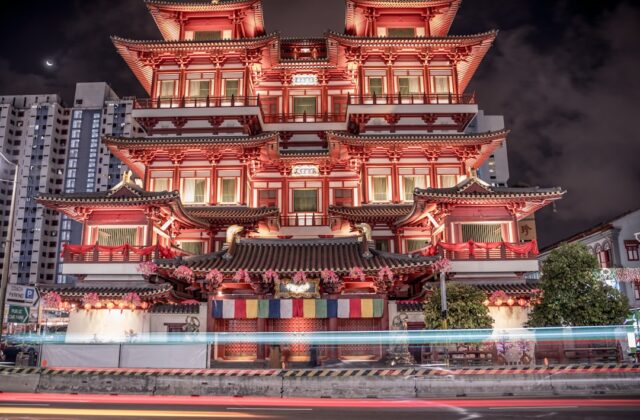
The undisputed jewel of the street is Thian Hock Keng Temple, one of the oldest and most important Hokkien temples in Singapore. Its name means “Temple of Heavenly Happiness”, and it is dedicated to Mazu, the goddess of the sea, to whom grateful sailors and migrants came to give thanks for a safe crossing. Built in the traditional southern Chinese style, and famously constructed without a single nail in its main structure, the temple is a riot of dragons, phoenixes, carved beams and gilded detail. A gazetted national monument, it remains an active place of worship, and even amid the surrounding skyscrapers its swooping roofline and richly decorated courtyards make it the natural centrepiece of any walk down Telok Ayer Street.
Al-Abrar Mosque and the Nagore Dargah shrine
A short stroll along the same street brings you to two landmarks of the Indian-Muslim community. Al-Abrar Mosque began life as a humble thatched prayer house set up by South Indian Muslim traders, later rebuilt into the handsome, gazetted monument that stands today, a reminder that this stretch of coast welcomed Muslim as well as Chinese arrivals. Nearby is the Nagore Dargah, a shrine built by the Chulia community in memory of a revered holy man. With its distinctive white facade and slender towers, it now houses an interpretive centre on the story of Singapore’s Indian-Muslim community, and together the mosque and dargah show how closely the faiths of Telok Ayer Street have always coexisted.
Around the corner: Yueh Hai Ching and Fuk Tak Chi
Just around the corner on Phillip Street sits Yueh Hai Ching Temple, the oldest Teochew temple in Singapore, also known as Wak Hai Cheng Bio, or “Temple of the Calm Sea”. Like Thian Hock Keng, it was a place where seafarers gave thanks for safe passage, and its roof ridges are crowded with some of the most elaborate figurine sculptures on any temple in the city. Back towards Telok Ayer Street stands Fuk Tak Chi, once a temple serving the Hakka and Cantonese communities and regarded as one of the oldest Chinese temples on the island. Now carefully conserved, it operates as a small street museum, recreating scenes of early Chinatown life and offering a quiet, free glimpse into the world the immigrants built here.
Ying Fo Fui Kun, Yu Huang Gong and the Methodist church
The street’s diversity runs deeper still. Ying Fo Fui Kun is the oldest Hakka clan association in Singapore, where newly arrived migrants could find kinship, assistance and a link to home, and its modest building is itself a conserved monument. A little further along, Yu Huang Gong, the Temple of the Heavenly Jade Emperor, occupies a beautifully restored building dedicated to the supreme deity of the Taoist pantheon. Faith here was never solely Chinese or Muslim, either: the Telok Ayer Chinese Methodist Church reflects the arrival of Christianity among the Straits Chinese and Hokkien communities, its architecture blending Western church design with local touches. Within a single walk, then, you pass through Taoist, Buddhist, Muslim and Christian traditions, and through Hokkien, Teochew, Hakka, Cantonese and Indian-Muslim heritages.
Walking the street today
Telok Ayer Street makes for one of the most rewarding short heritage walks in Singapore, and it is easy to reach. The nearest station is Telok Ayer MRT on the Downtown Line, which drops you almost onto the street itself, while Tanjong Pagar and Raffles Place stations are within walking distance. The route is flat and can be covered slowly in an hour or two. Most of the temples and mosques are active, so dress modestly, keep your voice low, remove your shoes where required and ask before photographing people at prayer. Many sit within the buzzing Amoy Street and Telok Ayer food precinct, so you can pair a morning of temple-hopping with a hawker lunch, standing quite literally on the spot where so many Singaporean stories began.
Frequently asked questions
Why is it called Telok Ayer Street?
“Telok Ayer” means “water bay” in Malay, a name that recalls a time when the street ran right along the seafront. Before extensive land reclamation pushed the coastline out towards today’s Marina Bay, the sea lapped up against Telok Ayer Street, which is why so many immigrants landed and built their first houses of worship here.
Which places of worship are on Telok Ayer Street?
The street and its immediate surrounds hold a remarkable cluster of faiths: Thian Hock Keng Temple (Hokkien), Al-Abrar Mosque and the Nagore Dargah shrine (both Indian-Muslim), Fuk Tak Chi (now a museum), Ying Fo Fui Kun (Hakka), Yu Huang Gong and the Telok Ayer Chinese Methodist Church. Just around the corner on Phillip Street is Yueh Hai Ching Temple (Teochew).
How do I get to Telok Ayer Street?
Take the MRT to Telok Ayer station on the Downtown Line, which brings you almost directly onto the street. Tanjong Pagar and Raffles Place stations are also within easy walking distance.
Can visitors go inside the temples and mosques?
Yes. Most welcome respectful visitors, and several, such as Fuk Tak Chi and the Nagore Dargah, double as heritage attractions. Dress modestly, remove your shoes where asked, keep quiet inside, and always ask before photographing anyone at prayer.