
Local Guide
Generator (Genset) Rental in Singapore: How to Choose
Whether you are powering a worksite where the grid has not yet been connected, running a backup for a critical event, or keeping operations alive during a planned shutdown, getting genset rental in Singapore right comes down to a handful of decisions made before the unit ever arrives. This guide walks event organisers, site managers, and facilities teams through sizing, set type, fuel, logistics, and pricing — so you hire the right machine the first time rather than discovering on the day that it trips under load.
We keep this factual and supplier-neutral. You will not find named brands or exact dollar figures here; instead, you will get the criteria to put in front of any rental company so you can compare quotes on equal terms. To shortlist firms, start with the industrial suppliers category and the wider WhitePages.sg directory.
Standby versus prime power: define the job first
The single most important question is how long the generator will run and whether it is your only source of power. Rental gensets are rated for different duty cycles, and confusing them is the most common — and most expensive — mistake.
- Standby power is sized for emergency or backup use: the genset sits idle and only runs when the mains supply fails. It tolerates short, occasional runs but is not built to carry your full load continuously for days.
- Prime (or continuous) power is for when the genset is the main source — a construction site with no SP supply, a remote event, or an extended shutdown. These sets run for long stretches and are rated accordingly, usually at a lower usable output than the same frame on standby duty.
Tell the rental company the use case in plain terms — “primary power, running 12 hours a day for three weeks” versus “backup only, may never start” — and let them confirm the rating. A set sized for standby but used as prime power will overheat or wear prematurely.
Sizing in kVA: do the load calculation, then add headroom
Gensets in Singapore are quoted in kVA (apparent power). To size correctly you need the total connected load and, just as importantly, the starting characteristics of that load.
List your loads
Add up the running wattage of everything that will draw power at once: lighting, tools, aircon, pumps, kitchen equipment, AV gear. Convert to kVA using the equipment’s power factor (motors and compressors are typically around 0.8). Your supplier can help, but arrive with a load list rather than a guess.
Account for starting (inrush) current
Motors, compressors, chillers, and lifts draw several times their running current at start-up. If you size only for steady-state load, the genset may stall or trip when a large motor kicks in. A common rule of thumb is to allow meaningful spare capacity — often 20–30% above continuous load, more where heavy motor starting is involved.
Avoid oversizing too
An over-large genset run on a light load is inefficient and can suffer “wet stacking” (unburnt fuel fouling the exhaust) over time. Right-sizing, not maximising, is the goal. If loads vary widely, ask whether two smaller sets or a load-following arrangement suits better than one giant unit.
Silent (canopy) versus open type, and where it sits
Most rentals in Singapore are silent or canopy-type sets: the engine sits inside an acoustic enclosure that cuts noise and shelters it from the weather. For events, residential-adjacent sites, or anywhere near offices, this is effectively mandatory — Singapore’s noise expectations and the practicalities of a dense, built-up environment leave little room for an open-frame set running near people.
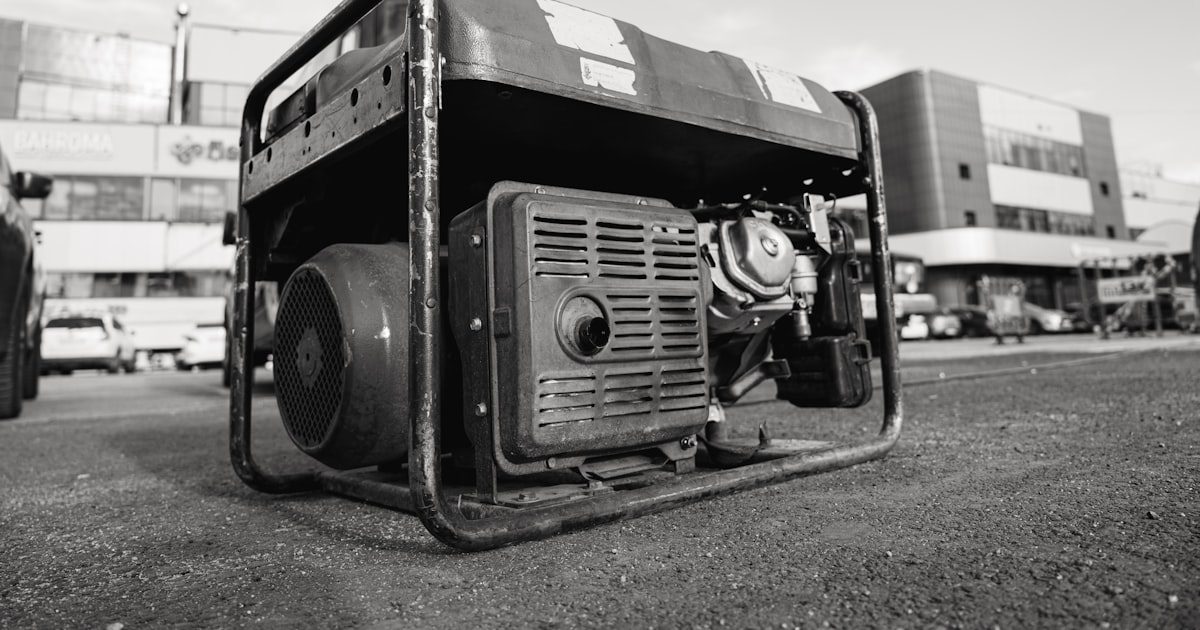
Open-type sets are cheaper and lighter but loud and exposed; they suit enclosed plant rooms or remote industrial yards where noise and rain are non-issues. Wherever the set goes, plan for ventilation and exhaust clearance, a level and load-bearing surface, and safe routing of cables. For event and outdoor use, confirm the canopy is weather-rated and that exhaust is directed away from the crowd.
Fuel, runtime, and refuelling
Almost all rental gensets here run on diesel. The practical questions are how much fuel the built-in tank holds, how many hours that gives you at your expected load, and who tops it up.
- Runtime per tank depends on load — a set at 75% load burns far more than the same set idling. Ask for an estimated litres-per-hour figure at your load so you can predict refuelling intervals.
- Bunded or extended tanks are worth requesting for long jobs to reduce refuelling trips; bunding also helps contain spills, which matters for environmental compliance.
- Refuelling responsibility should be explicit in the contract: does the supplier deliver fuel on a schedule, or do you arrange it? For multi-day events and sites, an agreed top-up plan avoids an embarrassing blackout mid-job.
Events versus construction versus backup: matching the set to the use
The same kVA number behaves differently across applications, and good suppliers tailor accordingly.
- Events and productions prioritise quiet operation, clean power for AV and lighting, and reliability during a fixed window. Synchronised or redundant (N+1) sets are common for shows where a trip is unacceptable. Delivery timing and a standby technician on site often matter more than headline price.
- Construction prioritises rugged sets, long prime-power runtimes, and easy refuelling. Sets may be relocated around the site, so weight, lifting points, and footprint count.
- Backup and shutdowns prioritise fast deployment and seamless changeover. Confirm whether the set ties into your existing switchgear, and whether an automatic transfer switch (ATS) is included or hired separately.
Delivery, installation, and operator
Logistics are part of the price and part of the risk. Clarify, in writing, who handles delivery and positioning, electrical connection, commissioning, and collection. A canopy genset is heavy, so confirm the supplier brings the right transport and lifting gear and that your site has access and a suitable hardstanding.
Decide whether you need an operator or standby technician. For critical events you usually do; for a set-and-forget backup you may not. If the connection involves your distribution board, an experienced electrician should make the termination. For West-side industrial sites in particular, you can cross-reference suppliers by location via the West region listings.
Maintenance and breakdown response
For any job longer than a day, the supplier’s service response is as important as the hardware. Ask how quickly they can attend a fault, whether they keep a replacement set on standby, and what is covered if the genset fails through no fault of yours. For mission-critical use, written response-time commitments — and ideally a redundant set — are worth paying for. Routine items like oil, coolant, and filter checks on long hires should be the supplier’s responsibility unless your contract says otherwise.
What affects pricing in Singapore
Genset rental is quoted as daily, weekly, or monthly hire, and the all-in cost depends on far more than the day rate. Treat any single number with caution until you have confirmed what it includes.
- Set size (kVA): larger frames cost more to hire, transport, and fuel.
- Hire duration: weekly and monthly rates are markedly cheaper per day than a single-day hire; long jobs should never be priced at the daily rate.
- Set type: silent canopies and synchronised/redundant arrangements cost more than basic open-frame sets.
- Fuel: sometimes excluded from the headline rate and billed on top, or supplied as scheduled top-ups — confirm which.
- Delivery, installation, and collection: transport, lifting, commissioning, and removal may be line items rather than included.
- Operator or standby technician, ATS, cabling, and distribution are common add-ons.
Ask every shortlisted firm for an itemised, all-in quote covering hire, fuel, delivery both ways, installation, and any standby cover, so you compare like with like rather than a bare day rate against a fully-serviced one. For a broader view of vetting suppliers, see our guide to the best industrial suppliers in Singapore and our walkthrough on choosing an industrial supplier.
Related guides
- Engineering & Industrial Services in Singapore: The Complete Guide
- Crane Rental in Singapore: How to Choose
- Forklift Rental in Singapore: How to Choose
FAQ
What size generator do I need to rent in Singapore?
Add up the running load of everything that will draw power at once, convert to kVA using each item’s power factor, then add headroom for motor start-up — often 20–30% above continuous load, more if you have large motors, chillers, or compressors. Share that load list with the rental company and have them confirm the rating for your duty cycle. When in doubt, right-size rather than over-size.
What is the difference between standby and prime power gensets?
Standby sets are rated for occasional emergency use when the mains supply fails and are not built to carry full load continuously. Prime (continuous) sets are rated to be your main power source for extended periods, such as a worksite with no grid connection. Tell the supplier how long and how continuously the set will run so they assign the correct rating.
Is fuel included in genset rental pricing?
Not always. Some quotes include a starting tank, some bill fuel separately, and some offer scheduled refuelling for long hires. Because runtime varies sharply with load, always confirm whether fuel is in the rate, how it is replenished, and who is responsible for refuelling before the job starts.
Do I need a silent (canopy) generator?
For events, residential-adjacent sites, and anywhere near offices or the public, a silent canopy set is effectively essential — it cuts noise and shelters the engine from weather. Open-frame sets are cheaper but loud and exposed, suiting enclosed plant rooms or remote industrial yards. Most rentals in Singapore default to canopy type for these reasons.
How quickly can a rental company respond if the generator fails?
This varies by supplier and by what you pay for. For critical events or long hires, ask for a written response-time commitment and, ideally, a redundant or standby set so a fault does not mean a blackout. Confirm what is covered if the set fails through no fault of yours, and who handles routine checks on extended hires.


