
Local Guide
Logistics & Freight Companies in Singapore: How to Choose
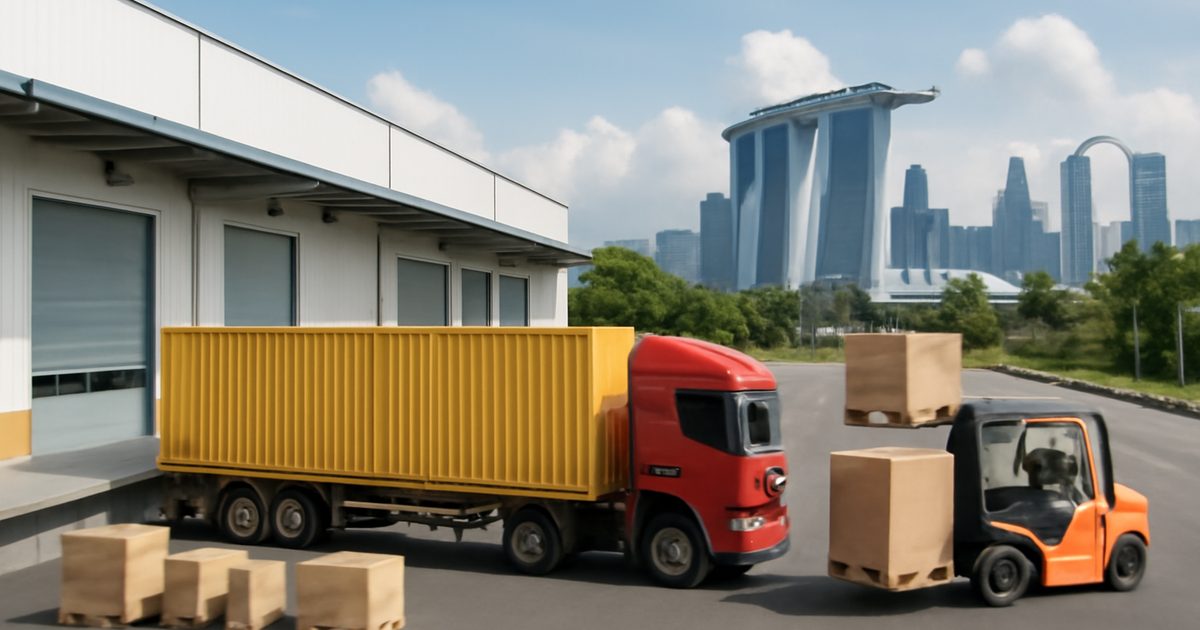
Choosing the right logistics company in Singapore can decide whether your stock arrives on time, your customs paperwork clears cleanly, and your customers receive their orders without drama. This guide is for business owners and operations leads weighing up freight forwarders, 3PL warehouses and last-mile partners, and it explains the moving parts so you can match a provider to your actual needs rather than the slickest sales pitch. Singapore’s status as a regional transhipment hub means you have plenty of choice — the trick is knowing what to ask.
We won’t name any companies. Instead, we cover the services, the cost drivers, and the questions that separate a capable partner from an expensive headache. Browse providers in our logistics and freight category or start from the wider WhitePages.sg directory when you’re ready to shortlist.
Know the services before you shop
“Logistics company” is a broad label. Most providers specialise, and a few do everything under one roof. Understanding the categories below helps you brief vendors accurately and compare like for like.
Freight forwarding (air, sea and land)
A freight forwarder arranges the movement of goods across borders, booking space with carriers and handling the documentation. Air freight is fast and suits high-value, time-sensitive or perishable cargo, but it costs the most per kilogram. Sea freight is far cheaper for bulk and heavier shipments, moving in full-container loads (FCL) or shared less-than-container loads (LCL), at the expense of longer transit times. Land freight via truck is relevant for cross-border moves to Malaysia and onward into the region. A good forwarder will recommend the mode that fits your budget, deadline and cargo type — not simply the one with the fattest margin.
3PL warehousing and fulfilment
Third-party logistics (3PL) providers store your inventory and pick, pack and ship orders on your behalf. This is the backbone of most e-commerce and B2B distribution operations. Look at warehouse location relative to your customers and the port or airport, the warehouse management system (WMS) they use, real-time inventory visibility, and whether they handle value-added services such as kitting, labelling or returns. A capable 3PL becomes an extension of your team, so integration with your order systems matters as much as the rack space.
Customs clearance
Every cross-border shipment needs to clear Singapore Customs, and many providers handle this declaration for you. Errors here are costly — a misclassified Harmonised System (HS) code or a missing permit can hold cargo and trigger penalties. Confirm that your provider is a registered declaring agent, understands controlled and dutiable goods relevant to your products, and can advise on Free Trade Agreements that may reduce duties at the destination. Smooth customs handling is one of the clearest signs of an experienced operator.
Last-mile delivery
The final leg — from the warehouse to the customer’s door — is where service quality becomes visible to your buyers. Assess delivery coverage across the island, time-slot options, proof-of-delivery, handling of failed deliveries and returns, and whether they support same-day or next-day options. For B2C brands, last-mile reliability directly shapes customer reviews, so weigh it carefully. If courier-style delivery is your main need, compare dedicated providers in our guide to the best courier services in Singapore.
Get the Incoterms right
Incoterms are the internationally recognised rules that define who is responsible for shipping, insurance, duties and risk at each stage of a transaction. Getting them wrong leads to surprise charges and finger-pointing. A few you’ll meet often:
- EXW (Ex Works): the buyer takes on almost everything from the seller’s premises — maximum control, maximum responsibility.
- FOB (Free On Board): the seller covers costs and risk until the goods are loaded onto the vessel; the buyer takes over from there. Common in sea freight.
- CIF (Cost, Insurance and Freight): the seller pays freight and insurance to the destination port, but risk passes earlier than many buyers assume.
- DDP (Delivered Duty Paid): the seller handles everything, including import duties, right to the buyer’s door — the most hands-off option for the buyer.
A reliable forwarder will explain which term suits your trade and flag where risk actually transfers. If a provider can’t talk you through Incoterms plainly, treat that as a warning sign.
What drives the cost
Singapore logistics pricing is quote-driven and varies with cargo, routes and service level, so we deal in ranges and principles rather than fixed figures. The main cost drivers:
- Mode and speed: air freight commands a steep premium over sea; express last-mile costs more than standard.
- Weight and volume: carriers charge on chargeable weight — the greater of actual weight or volumetric (dimensional) weight — so bulky-but-light cargo can cost more than expected.
- Distance and route: direct lanes are cheaper than those needing transhipment; remote destinations add surcharges.
- Warehousing terms: 3PL costs typically combine storage (per pallet or cubic metre), inbound handling, and per-order pick-and-pack fees, plus value-added services.
- Customs and compliance: declaration fees, permits and duties depend on your goods and destination.
- Fuel and seasonal surcharges: peak periods and fuel-price swings can move quotes noticeably.
- Insurance: cargo insurance is a small but worthwhile line item, especially for high-value goods.
When comparing quotes, make sure each one covers the same scope. An attractively low headline rate that excludes handling, customs or surcharges is rarely the cheapest once the invoice lands.
Match the provider to your size and stage
The best fit depends heavily on whether you’re an SME finding your feet or an enterprise moving serious volume.
For SMEs and growing e-commerce brands
Smaller businesses usually benefit from a provider comfortable with lower volumes, flexible contract terms, and straightforward onboarding. Prioritise responsiveness, a single point of contact, transparent pay-as-you-grow pricing, and easy integration with common e-commerce platforms. Avoid locking into rigid long-term minimums before you understand your true order patterns. A nimble 3PL that grows with you is often more valuable than a giant that treats your account as a rounding error.
For established and enterprise operations
Larger shippers need scale, redundancy and data. Look for proven capacity across multiple modes, strong carrier relationships for competitive rates, robust technology with API integration and analytics, and the compliance maturity to handle complex or regulated goods. Service-level agreements (SLAs) with measurable KPIs — on-time delivery, order accuracy, inventory accuracy — become essential at this stage. Continuity planning also matters: ask how the provider handles disruptions, port congestion or sudden demand spikes.
Red flags to avoid
- Vague quotes: reluctance to itemise charges or explain surcharges often hides cost creep.
- No clear SLAs or KPIs: if a provider won’t commit to performance metrics, you have nothing to hold them to.
- Poor visibility: a lack of tracking or real-time inventory data leaves you guessing.
- Weak customs knowledge: hesitation on HS codes, permits or declaring-agent status is a serious concern.
- Slow communication: sluggish replies during the sales stage usually worsen once you’re a signed client.
- One-size-fits-all answers: a partner who doesn’t ask about your cargo, volumes and deadlines isn’t designing a solution for you.
Related guides
- Engineering & Industrial Services in Singapore: The Complete Guide
- How to Choose a Freight Forwarding Company in Singapore
- Best Logistics & Freight Companies in Singapore (2026)
- How to Import Goods into Singapore (2026 Guide)
- Air Freight Forwarders in Singapore: How to Choose
Frequently asked questions
What is the difference between a freight forwarder and a 3PL?
A freight forwarder focuses on moving goods across borders — arranging carriers, transport modes and documentation. A 3PL (third-party logistics provider) focuses on storing inventory and fulfilling orders through warehousing, pick-and-pack and distribution. Some providers in Singapore offer both, but they are distinct services, and you should brief vendors clearly on which you need.
How much does logistics cost in Singapore?
There’s no flat rate — costs are quoted per shipment or per contract and depend on mode, weight, volume, route, warehousing terms, customs and surcharges. Air freight is far more expensive than sea freight, and express last-mile costs more than standard delivery. The most reliable approach is to request itemised quotes from two or three providers using the same scope, then compare the full landed cost rather than the headline rate.
Do I need to handle customs clearance myself?
Usually not. Most freight forwarders and many 3PLs act as registered declaring agents and handle the Singapore Customs declaration for you, including HS classification and permits. You’ll need to supply accurate product details and commercial documents. Because customs errors are costly, confirm a provider’s declaring-agent status and experience with your category before committing.
Which Incoterm should a small importer choose?
Many smaller importers prefer terms that minimise their exposure, such as CIF or DDP, because the seller takes on more of the shipping, insurance and sometimes duties. DDP delivers goods to your door with duties paid, which is the simplest for newcomers, though it can carry a higher built-in price. The right choice depends on your control preferences, cash flow and how much risk you want to manage — a good forwarder will advise based on your specific trade.
How do I shortlist a logistics partner?
Start by listing your real requirements — cargo type, volumes, destinations, speed and budget — then compare providers against them. Browse the logistics and freight category on WhitePages.sg, request itemised quotes covering identical scope, ask about SLAs, technology and customs capability, and check how responsive each provider is during the sales stage. The right partner asks as many questions as you do.


